01
Serious mental
health challenges
Experience supporting adults living with serious mental illness through individual therapy, group support, crisis assessment, and coordinated community care.
Stability, dignity, and recoveryCARE THAT STARTS WITH YOU
Life can feel heavy. Finding support shouldn’t add to the weight. I’m Christina, a Registered Associate Social Worker with experience helping people navigate complex mental health challenges.
Currently offering consultation only. Projected to be licensed for private-practice psychotherapy by January 2027.
AREAS OF EXPERIENCE
Every person’s needs are different. My background combines clinical mental health care with the practical support that helps people navigate everyday life.
Experience supporting adults living with serious mental illness through individual therapy, group support, crisis assessment, and coordinated community care.
Stability, dignity, and recoveryCare informed by an understanding of trauma, including Seeking Safety groups, coping skills, substance use counseling, and harm reduction approaches.
Safety, choice, and compassionA background in therapy, family education, and behavioral support, with collaboration across caregivers, schools, child welfare, and treatment teams.
Connection and understandingPractical experience connecting people with housing, healthcare, community services, and other supports while advocating within complex systems.
A clearer path to supportMY THERAPEUTIC STYLE
I believe therapy should feel like a partnership—not a place where someone tells you who you are or what you should do. We look at what is hurting, what has helped you survive, and what would make life feel more manageable.
What working together may feel like
I listen without judgment and take time to understand your experiences, culture, relationships, and priorities. Together, we choose goals that matter to you and move at a pace that feels safe and realistic.
We notice how thoughts, emotions, past experiences, and current situations may be affecting one another. I help you name what is happening and practice tools for handling intense feelings, stress, and difficult moments.
You are more than a diagnosis or a difficult season. We identify the strengths and survival skills you already use, then build practical strategies that fit your life—not a one-size-fits-all plan.
Mental health does not exist separately from housing, family, work, healthcare, culture, or community. When helpful, we connect emotional support with resources, advocacy, and care coordination.
IN CLINICAL TERMS
My clinical orientation is collaborative, culturally responsive, trauma-informed, strengths-based, and grounded in a person-in-environment perspective. Treatment is individualized according to the client’s goals, readiness, needs, and lived context.
Prioritizes the therapeutic alliance, client self-determination, existing capacities, and collaborative goal setting.
Emphasizes emotional and physical safety, choice, empowerment, stabilization, coping, and the connection between trauma and substance use.
Draws from CBT and DBT-informed interventions to examine thought-behavior-emotion patterns and strengthen mindfulness, distress tolerance, emotional regulation, and interpersonal effectiveness.
Uses acceptance, present-moment awareness, cognitive defusion, values clarification, and committed action to increase psychological flexibility.
Considers family, culture, community, institutions, and social determinants of health, integrating advocacy, case management, and interdisciplinary care coordination when appropriate.
Meets clients where they are, supports informed choice, reduces risk, and recognizes that recovery is individualized and non-linear.
These descriptions explain Christina’s therapeutic style and clinical perspective. At this time, Christina offers consultation only and is projected to be licensed for private-practice psychotherapy by January 2027.
MEET CHRISTINA
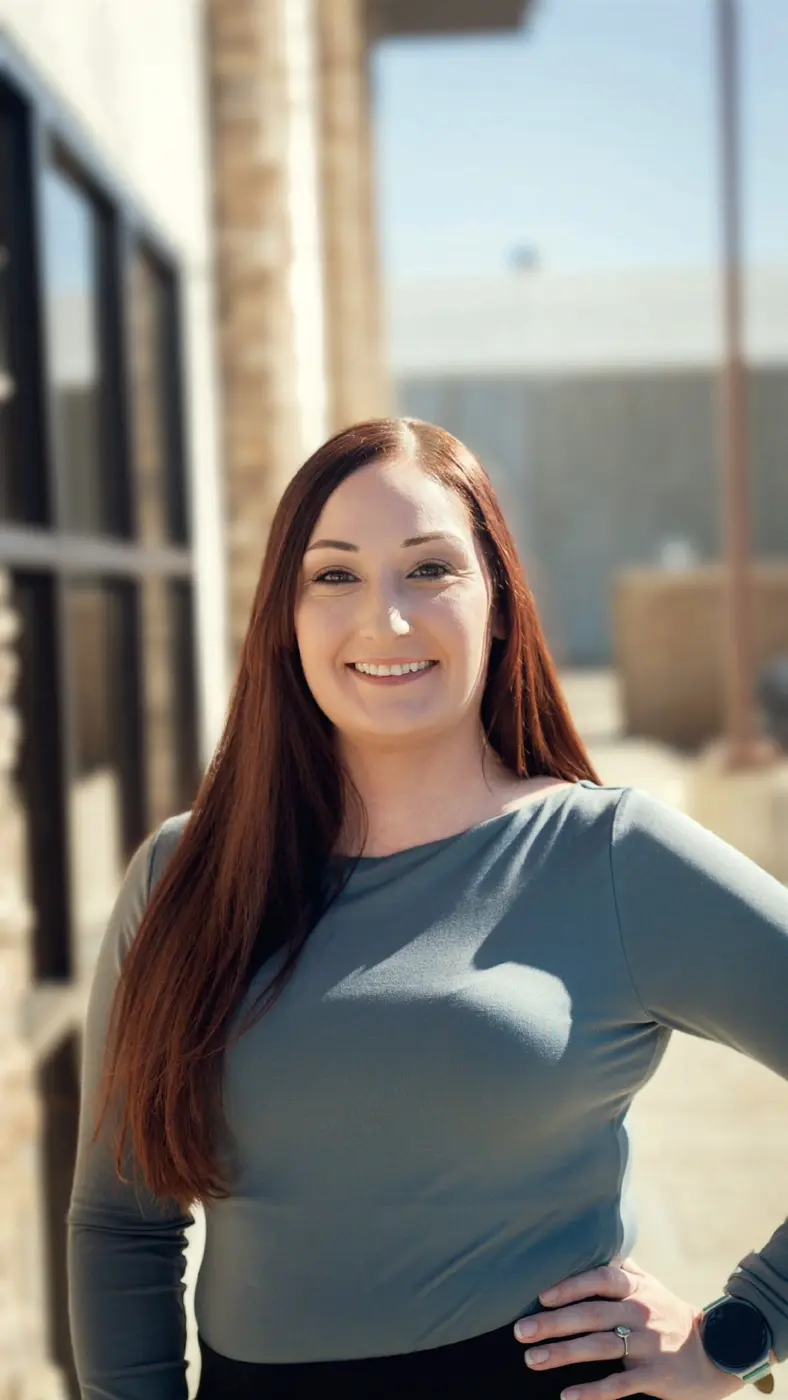
I’m Christina Guevara, MSW, a Registered Associate Social Worker with a background in community mental health, education, and behavioral support.
My work with Stanislaus County Behavioral Health & Recovery Services has included supporting adults with serious mental illness, as well as children, young people, and families. That experience has taught me to pay attention to both emotional needs and the systems that shape access to care.
Before entering clinical social work, I supported students and people with developmental disabilities in school and community settings. Across these roles, the focus has remained the same: listen carefully, respect each person’s strengths, and help make the next step more manageable.
Start a conversationLCSW LICENSURE PROGRESS
Hours transcribed from the readable Dawn, Shannete, Natalie and Val records and reviewed September 18, 2026. All recorded hours are included in this estimate, including unsigned Dawn and Val logs. Identical reuploads are counted once. These are provisional record totals, not hours approved by the California Board of Behavioral Sciences (BBS).
Included within category A; never added twice.
Before the category B cap and overlap review.
Provisional maximum; final countable hours remain unconfirmed.
| Source | A · Clinical | A1 · Psychotherapy* | B · Nonclinical | C · A + B |
|---|---|---|---|---|
| Dawn · 11 weekly logs | 976 | 812.5 | 970 | 1,946 |
| Shannete · verification form | 466.5 | 263.5 | 735.5 | 1,202 |
| Natalie · verification form | 0 | Not entered† | 20 | 20 |
| Val · unsigned weekly log (val2.pdf) | 127 | 108 | 93 | 220 |
| Readable-file subtotal | 1,569.5 | 1,184 | 1,818.5 | 3,388 |
*A1 is a subset of A. †Natalie’s A1 field is blank; no A1 hours were added, consistent with the form’s recorded A = 0. Dawn’s July 26–September 13, 2026 A1 entries are blank with a printed subtotal of 0, used as written.
1,569.5 clinical hours + 1,000 nonclinical hours = 2,569.5 hours. The recorded B subtotal exceeds the allowable maximum by 818.5 hours. This calculation applies only that cap; it assumes the underlying hours are distinct and otherwise eligible.
On that assumption, at least 430.5 additional category A clinical hours would be needed to reach both 2,000 clinical hours and 3,000 total hours. The recorded A1 subtotal exceeds the 750-hour minimum by 434 hours, subject to verification of eligibility and overlap. Missing records or corrections may change these figures.
BBS requires 3,000 qualifying hours, including at least 2,000 clinical hours and 750 face-to-face psychotherapy hours within those clinical hours, with no more than 1,000 nonclinical hours. BBS experience requirements (PDF).
| Source | Individual / triadic | Group |
|---|---|---|
| Dawn | 98 | Not entered |
| Shannete | Not entered | 146 |
| Natalie | 1 | Not entered |
| Val | 3 | 16 |
| Recorded subtotal | 102 | 162 |
The 264 recorded supervision hours are not added on top of A + B: direct supervisor contact belongs in B. Confirm with the supervisors that B includes those hours, particularly Dawn’s rows that show supervision but B = 0.
Rules and documentation guidance: BBS ASW FAQ, revised January 2026 (PDF), especially questions 16, 25–26 and 37–38. Final acceptance is determined by BBS.
Source: dawn_20260918204248.pdf. Page order follows the uploaded file; the figures below match each printed page subtotal.
| Page · period | A | A1 | B | C |
|---|---|---|---|---|
| 1 · Jul 26–Sep 13, 2026 | 80 | 0 | 80 | 160 |
| 2 · May 17–Jul 19, 2026 | 100 | 100 | 100 | 200 |
| 3 · Mar 8–May 10, 2026 | 110 | 107 | 110 | 220 |
| 4 · Jan 1–Mar 1, 2026 | 120 | 115 | 120 | 240 |
| 5 · Dec 21–28, 2025 | 30 | 25 | 30 | 60 |
| 6 · Oct 12–Dec 14, 2025 | 100 | 100 | 100 | 200 |
| 7 · Aug 3–Oct 5, 2025 | 110 | 106 | 110 | 220 |
| 8 · Mar 9–May 11, 2025 | 100 | 100 | 100 | 200 |
| 9 · Oct 20–Dec 22, 2024 | 100 | 49.5 | 100 | 200 |
| 10 · Dec 29, 2024 | 8 | 2 | 0 | 8 |
| 11 · Jan 1–Mar 2, 2025 | 118 | 108 | 120 | 238 |
| Dawn subtotal | 976 | 812.5 | 970 | 1,946 |
Other sources: Shannete(1).pdf, page 2; natalie(1).pdf, page 2; val2.pdf, page 1. The reuploaded Dawn, Shannete, Natalie and original Val files are identical to their earlier copies and are counted once. val(1).pdf contains two blank pages; Val’s 220 hours come from val2.pdf. Original documents and signatures are not published here.
CONSULTATION INQUIRIES
Christina currently offers consultation only. She is projected to be licensed for private-practice psychotherapy by January 2027. Professional collaboration inquiries are welcome, too.
Ask about consultation by email.
Email Christina christinamarieguevara@gmail.comPlease keep your first email brief and leave out sensitive health information. Emailing does not establish a therapist-client relationship.